UCLA Professor

UPDATE – Upzoning was repealed by Lakewood voters by an almost 2-1 margin on April 7, 2026.
‘Upzoning’ usually refers to zoning changes that allow more ways to use land in an effort to increase the density and supply of housing.
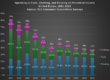
Professor Kim, shown above, co-authored research at UCLA addressing the impacts of upzoning in New York City. Read on to view their findings.
The City of Lakewood, Colorado has approved a city-wide upzoning scheme largely in response to the influence of private equity developers and the ‘redress’ movement as described at their website redressmovement.org.
Redress posted an article titled: ‘A Step Closer to Ending Segregation Zoning in Lakewood, CO’
The article claims that after the US Supreme Court banned housing discrimination based on race including in housing documents and plat maps in 1948, ‘segregationists’ then fell back on ‘technically’ race neutral policies like large lot, single-family zoning and HOAs.
That argument falls flat since they cite a court case that preceded the 1948 SCOTUS decision. Obviously, what was at issue in the 1924 case they cited could not have been a reaction to a SCOTUS decision 20 years in the future! It gets worse.
Keep in mind their entire argument against large lot, single family zoning is that such zoning is discriminatory even though they admit such zoning is actually ‘race neutral’ but to redressmovement.org that fact is simply a technicality! And that is good enough for Lakewood City Council to upzone the entire city – based on a technicality!
Looking further at dubious claims by redressmovement.org, they directly quote a key phrase they say was used by the judge in that 1924 court decision. Yet that quotation does not occur anywhere in the text of the court decision they reference.
They specifically state the judge mentioned ‘the single-family zone’ in order to help establish context for their interpretation of that court decision.
However, since the phrase they directly quote does not appear anywhere in the court decision, it appears redressmovement.org may have fabricated it to support their apparently unfounded interpretation.
That same court case also makes no mention of HOAs even though redressmovement.org says:
“The architects of zoning law spoke this intention out loud”
including with regard to HOAs when they cited that court case.
Their claim that HOAs are used in Lakewood to impose racial discrimination is also puzzling because they even admit HOAs are ‘technically’ race neutral. It is unclear how HOAs discriminate against minorities or what possible connection upzoning the entire city has to reducing alleged racial discrimination by HOAs.
Between 1910 and 1948, 17% of plat maps in Lakewood contained racist language prohibiting black residents. Fortunately, the vast majority of plat maps did not contain such language.
The redress folks claim that large lot, single family zoning and HOAs ‘create the same effect’ today as those blatantly discriminatory provisions that were banned by the US Supreme Court in 1948. Yet, they admit single family zoning and HOAs are ‘technically’ race neutral.
So they want to have it both ways. They are claiming racial discrimination while agreeing the source of the discrimination is also race neutral, but a technicality. Obviously, that is not an argument they can put over at the US Supreme Court level. But to the folks on Lakewood City Council, that argument must be an easy sale.
We could be on a slippery slope because if such extreme claims of discrimination succeed without proof because the contradicting reality is simply ignored as a technicality, where is the limit to future extreme claims Lakewood City Council will accept as valid issues also deserving of another extreme policy response?
After all, the mayor has stated upzoning is simply the ‘first step’! What is the next step? Nobody knows what the actual agenda of this council is because they have concealed it from the voters. Nobody ran for council on upzoning the city. So are we going to see additional ill-conceived policy initiatives that city councilors also concealed from voters?
If the redress folks truly believe HOAs are discriminating against minorities, then let’s just get rid of HOAs! Talking about that would at least have some connection to their complaint. And there might even be a groundswell of support in Lakewood and maybe Colorado for eliminating HOAs. Doing so would be a heavy lift, but it could be worth considering since their might be a co-coalition of support from the redress folks and others that could make it happen.
The people who want HOAs are municipalities because HOAs do their work for them. Cities used to maintain all the parks and open spaces. Now HOAs do a lot of that. I once lived in an HOA that had 50 acres of open space to maintain. Mowing 50 acres for fire prevention. Controlling invasive plants. It wasn’t cheap. It saved the city a lot of time and effort. That is mentioned as an example.
Yes, Lakewood maintains a lot of park property. But HOAs also do. If anyone wants to eliminate HOAs and transfer their grounds maintenance to the city, we would probably find strong resistance from city hall.
Cities have transferred a lot of their workload to HOAs. That is the key reason we have so many HOAs. They are not there as a way to discriminate in housing. If they violate any Fair Housing laws, they can be sued and they are sued at times.
Of course, proponents of upzoning also claim it will be the solution to the shortage of affordable housing. However, research from UCLA contradicts that expectation because in their study of New York City, upzoning caused rents and housing prices to increase.
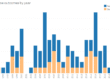
The Lewis Center for Regional Policy Studies at UCLA has studied the impacts of upzoning in New York City and published their findings in 2024. Please access the study for a more complete view of their findings.
They found:
We find that upzoning is positively associated with signs of gentrification – upzoned neighborhoods became whiter, more educated and more affluent in the long run. Upzoning is also associated with increases in housing production, but housing prices also increased…
Black-majority and low-income neighborhoods experienced gentrification to the greatest extent”
The research clearly supports the prediction that upzoning Lakewood will increase the cost of housing – both rental and owner-occupied units.
If upzoning is not repealed on April 7, 2026, the affordability problem will get worse in Lakewood and the public may become weary and less sympathetic to addressing the issue down the road as more voters come to recognize City Council ignores them.
UPDATE – Upzoning was repealed by Lakewood voters by an almost 2-1 margin on April 7, 2026.