Homelessness, and especially people who are unhoused, is a growing concern in the US. Upzoning advocates have pointed to the high cost of housing as a key driver of homelssness and that upzoning would make housing more affordable and therefore would reduce the number of unhoused persons in a city.
‘Upzoning’ is a city planning strategy to increase housing density and therefore housing supply via related zoning changes to support the strategy.
Profile: Lakewood, Colorado

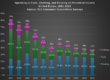
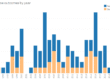
Lakewood, CO Median Housing Cost – US Census Data 2019-2023
Lakewood, Colorado is a city of 156,000 with 329 unhoused residents as of the 2024 point-in-time count. Lakewood also recently upzoned the city adopted in late 2025 but at this early stage, it is not possible to see any affordability improvement.
Based on US Census Data 2019-2023, housing in Lakewood is affordable. The median housing cost is $1,729/month and median household income is $85,789. That means housing only costs 24% of median income which is well below the HUD 30% affordability threshold.
Median gross rent was $1,746/month and median income of renter households was $60,018 in 2022 which indicates renters in Lakewood are cost burdened since housing consumes 35% of income which exceeds the 30% HUD affordability threshold.
60% of renters were cost burdened in 2022. 42% of housing units in Lakewood are renter occupied.
If we look at what a a buyer can purchase in Lakewood in December 2025, the Rocket Mortgage calculator estimates a buyer with the median household income of $85K and 5% down with 720+ credit rating could purchase a home up to $284,000. There were 51 properties for sale on Zillow for that amount or less in December 2025.
Renters with the median income of $60,018 per year can afford $1,400 rent per month plus $100 for utilities based on the 30% HUD limit. There were 402 Lakewood rentals advertised on Zillow in Dec 2025 for $1,400/month or less.
Therefore, before upzoning, Lakewood aggregate housing was already quite affordable according to US Census statistics although rental housing was not typically as affordable. Other proprietary and often subscription-based statistics from the for-profit housing industry may have various different views and may exaggerate the need for housing such as Zillow’s extremely inflated model which is based on every unrelated or unmarried person having their own individual housing unit with no roommates.
Profile: Portland, Oregon
Portland, Oregon is a city of 635,749 with nearly 7,500 unsheltered residents according to county data. (Another agency claims the number is over 15,000 in Portland!)
Portland has four times the population of Lakewood but 22 times the number of unhoused residents despite a long history of state and local upzoning measures implemented starting back in 1978 with Senate Bill 100.
It would appear that Portland’s efforts to reduce the number of unhoused residents are failing.
Yet, Portland has implemented upzoning in multiple phases over several decades. A significant wave of upzoning occurred between 2001 and 2002, primarily in southwestern Portland, as part of the adoption of the Southwest Community Plan by the Portland City Council. This period saw the upzoning of nearly 679 acres of residential land, which accounted for almost half of the total upzoned land in the city between 2000 and 2017.
Earlier, from 1978 to 1982, Oregon’s state-level anti-sprawl law, Senate Bill 100, triggered a major upzoning that doubled the maximum housing capacity of the Portland metro area and tripled the share of buildable land zoned for multifamily housing. This reform was a sweeping change to low-density, exclusionary zoning practices.
Despite upzoning to address housing affordability, Portland now has hundreds of homeless encampments. Here is a map.

Just some of the encampments in Portland, Oregon
Portland ‘cleans up’ between 500 and 800 homeless camps EVERY MONTH according to the map linked above.
If upzoning were going to make a difference in the homeless problem or the housing affordability problem in Portland, it should have kicked in by now.
After over 40 years of upzoning, only 2% of homes for sale in Portand in 2023 were affordable to a household earning the median income.
Comparison – In 2022, 80% of Lakewood homeowners could afford their housing without exceeding 30% of their income which is the HUD definition of affordability.
The Zillow comparison shows a different perspective:
Portland median renter income 2023: $58, 946. Affordable rent: $1,373 + 100.
Zillow listed 1,587 rental units available in Dec 2025 for 1,373/mo or less in Portland.
Zillow listed 258 homes for sale at $247,580 or less based on median income of 75,149.
Using the Zillow comparisons, it appears Portland offers buyers 20% more homes to select from than Lakewood given that Portland is 4 times the size. However, renters with median income have somewhat more options to rent in Lakewood than are available in Portland considering Portland is 4 times larger.
Profile: Minneapolis, Minnesota
Minneapolis, MN is a city of 429,954 with 429 unsheltered residents in all of Hennepin County as of the point-in-time count in 2025.
Minneapolis has 2.8 times the population of Lakewood and only 1.3 times the number of unhoused residents which is better than Lakewood is doing.
Portland is 1.5 times larger than Minneapolis yet has over 17 times as many unhoused residents which is far worse than either Lakewood or Minneapolis.
Based on these comparisons, Minneapolis is doing better than Lakewood in reducing the number of unhoused residents and doing much better than Portland.
Why is Minneapolis getting a handle on reducing the unhoused count?
Minneapolis attributes their low and declining rate of unhoused citizens to their multiple programs including combating drug abuse and fentanyl addiction, providing mental health services, response team outreach, behavioral crisis units, youth education of brain health, free 24-hour NARCAN vending machines, mobile healthcare to low-income neighborhoods, rental assistance, free addiction medication, affordable housing investments, upzoning and more.
Proponents of upzoning in Lakewood not only ignore key factors that Minneapolis is facing head on, but in Lakewood, proponents actively spread misinformation including this video they posted on Next door. The video even uses fancy charts to make various misleading claims that contradict established research.
Misleading Claim – They claim there is no correlation with homelessness and mental health.
Research published in JAMA Psychiatry included over 50,000 participants and found “the current prevalence of mental health disorders among people experiencing homelessness was 67% and the lifetime prevalence was 77%”. Yet, the overall prevalence of any mental illness (AMI) among US adults is only 23%. The research disproves the misleading claim that there is no correlation between homeless persons and mental health disorders.
The misinformation video also claims no correlation between homelessness and alcohol or substance abuse. Again, this claim is misleading. Based on data from the US Centers for Disease Control as shown in the chart, alcohol and substance abuse is 6-7 times more prevalent among the homeless population.

I shared some of this information with local city hall advocates of upzoning. I was accused of ‘fear mongering’ and told ‘you want the taxpayers to subsidize your low-density lifestyle’. (Even though I’ve lived in attached housing recommended by upzoners most of my life and still do!)
If their belligerent, head-in-the-sand attitude represents the approach of city hall to upzoning and homelessness, then we could see the numbers of unhoused persons keep increasing in Lakewood. Because upzoning is not the panacea local upzoners seem to think it is.
Lakewood’s upzoning proponents are saying neither mental health disorders nor alcohol or substance abuse have anything to do with homelessness. Their misleading video makes those claims crystal clear. Supposedly, the only possible explanation for all homelessness must be the high cost of housing. Their willingness to use misinformation to suggest that extreme argument should give anyone pause.
Lakewood’s upzoning law also has no requirement for any affordable housing. Therefore, market rate housing is primarily what will get built.
So far, it does not appear Lakewood plans to follow the Minneapolis example. Ignoring the facts and ignoring the Minneapolis example increases the risk that unhoused folks in Lakewood will continue to construct disheveled homeless encampments around the city and engage in behaviors associated with their various untreated afflictions going forward. Simply forcing unhoused homeless persons to relocate their camps every few months does not address any drug, alcohol, mental health or financial problems but it does create recurring expenses for taxpayers. It also obviously disrupts the lives of unhoused persons and complicates any efforts on their part to remediate their issues.
If Lakewood intends to ignore the association of alcohol, drugs and mental health disorders among the homeless population, that could delay or prevent some from receiving needed treatment. That would be unfortunate and possibly inhumane.
Mental health disorders can be helped. Example – After intensive in-patient treatment, a paranoid schizophrenic I knew who thought all cars on the road were foreign agents spying on him, later went on to complete a 4-year UC-Berkeley degree and 3 years in the Peace Corp. But the current philosophy towards mental health disorders locally seems to be that giving free meals and clothes will allow persons with serious mental health disorders to ‘work through’ their ‘issues’.
Although, given how much better Lakewood was already doing without upzoning compared to Portland, it could be Lakewood already has an effective approach which would be very good news.
However, if city hall actually believes the upzoners’ misinformation, let’s hope for a change in direction at city hall that reflects a more constructive and informed course of action regarding homelessness and affordable housing.